Introduction
You post on Instagram, get 200 likes, and… nobody buys. Sound familiar? The problem usually isn’t your product — it’s that you don’t have a structured path guiding people from “never heard of you” to “took out their wallet.” That path is called a sales funnel, and understanding this sales funnel guide will change how you think about every marketing rupee you spend. Let’s break down exactly what it is and how to build one step by step, even if you’re starting with zero technical knowledge.
1. What Exactly Is a Sales Funnel?
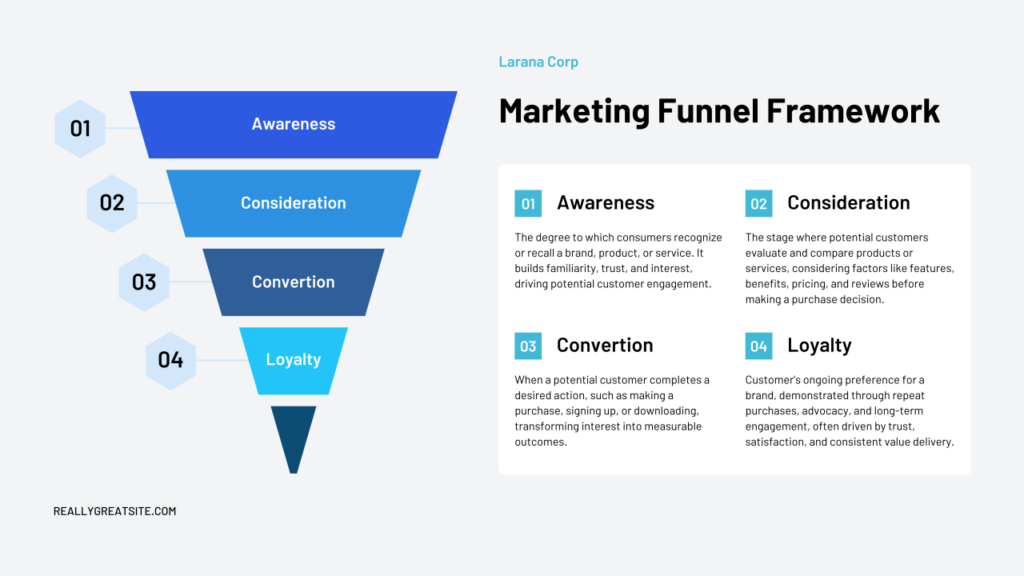
A sales funnel is the journey a potential customer takes from first discovering your business to actually making a purchase — and ideally, becoming a repeat buyer. It’s called a “funnel” because you start with a wide pool of people who’ve merely heard of you, and that pool naturally narrows as people drop off at each stage, until only your most serious buyers remain at the bottom.
Quick Answer: A sales funnel is a step-by-step model of how strangers become customers — moving from awareness, to interest, to decision, to action — and understanding it helps you know exactly what message to show someone at each stage.
2. Stage 1: Awareness — Getting Noticed
This is where someone first encounters your brand — through an Instagram reel, a Google search, or a friend’s recommendation. Your only job here is to be interesting enough to earn a second look. Focus on value-first content (tips, entertainment, relatable stories) rather than a hard sales pitch, since nobody buys from someone they’ve just met.
3. Stage 2: Interest — Building Curiosity
Once someone notices you, they start asking, “is this actually useful to me?” This is where blog posts, comparison content, and educational videos work well. A skincare brand, for example, might post “5 signs your skin needs a routine change” rather than “Buy our serum now” — the goal is to educate, not sell yet.
4. Stage 3: Decision — Presenting the Offer
Now the prospect is genuinely considering buying — from you or a competitor. This is where testimonials, case studies, comparison charts, and limited-time offers come in. Show clear proof (real customer results, ratings, before-after examples) because decision-stage buyers are actively looking for reasons to trust you over the alternative.
Quick Answer: The decision stage is where a prospect compares options and needs proof — testimonials, reviews, or demonstrations — to feel confident choosing your product over a competitor’s.
5. Stage 4: Action — Closing the Sale
This is the actual purchase moment. Remove every possible friction point here: confusing checkout pages, unclear pricing, or too many form fields. Even a 2-second delay in page load time can measurably reduce conversions at this stage, according to multiple e-commerce studies.
6. Stage 5: Retention — Turning Buyers Into Repeat Customers
Most businesses stop at the sale, but the real profit is in the next purchase. A simple post-purchase email sequence, a loyalty discount, or a follow-up WhatsApp message asking about their experience can turn a one-time buyer into a repeat customer worth 3-5x their first order. [link to related guide on content marketing for beginners here]
7. How to Actually Build Your First Funnel
Start simple: one piece of awareness content (a reel or blog post) → one interest-stage asset (a free guide or checklist in exchange for an email) → one decision-stage page (a landing page with testimonials and a clear offer) → one action step (a simple checkout or WhatsApp order link). You don’t need expensive software to start — a Google Form and an email list can run your first funnel.
8. Common Sales Funnel Mistakes to Avoid
Many beginners try to sell directly at the awareness stage, which feels pushy and drives people away before trust is built. Others build a beautiful funnel but forget the retention stage entirely, leaving money on the table. Track drop-off rates at each stage using free tools like Google Analytics so you know exactly where prospects are losing interest.
FAQs
Q: What is the difference between a sales funnel and a marketing funnel? They’re closely related — a marketing funnel usually covers awareness and interest (getting attention), while a sales funnel extends through decision and action (actually closing the sale).
Q: How long should a sales funnel take to convert someone? It varies widely by product — a low-cost item might convert in minutes, while a high-ticket service could take weeks or months of nurturing through the funnel.
Q: Do small businesses really need a formal sales funnel? Yes — even a simple, informal version (a WhatsApp broadcast list plus a landing page) counts as a funnel and dramatically improves conversion compared to random, unstructured selling.
Q: What tools can I use to build a sales funnel for free? Google Forms, Mailchimp’s free tier, and a simple landing page builder like Carrd cover most beginner needs without any upfront cost.
Q: Why is my sales funnel not converting? Usually it’s a mismatch between the stage and the message — showing a hard sales pitch too early, or not offering enough proof at the decision stage.
Conclusion
A working sales funnel turns random, unpredictable sales into a repeatable system you can measure and improve. Start small: map out your current customer journey, identify which stage is leaking the most prospects, and fix just that one stage first. Once your funnel is converting consistently, scaling your marketing spend becomes far less risky — because you already know it works.
Suggested image alt text: “Sales funnel diagram showing awareness interest decision action stages”