Introduction
You’ve got a product ready to sell, and now comes the big question: Amazon or Flipkart? Both platforms dominate India’s e-commerce space, but they cater to sellers differently in ways that genuinely affect your profit margins and growth speed. This Amazon vs Flipkart for sellers comparison breaks down the real differences — fees, audience, support, and logistics — so you can make a decision based on facts, not guesswork.
1. Audience Reach and Customer Base
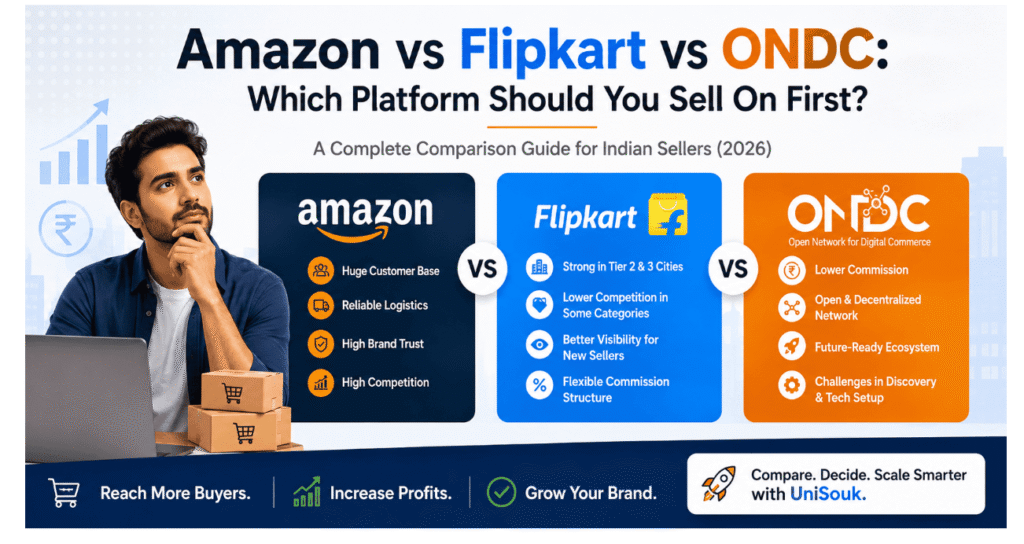
Amazon India tends to attract a slightly more premium, brand-conscious customer base, particularly in electronics and international products, while Flipkart has historically had stronger penetration in Tier 2 and Tier 3 Indian cities, especially for categories like fashion and mobile phones.
Quick Answer: Amazon generally skews toward a more premium, urban customer base, especially for electronics and global brands, while Flipkart has traditionally had deeper reach into smaller Indian cities and towns, particularly for fashion and mobile categories.
2. Seller Fees and Commission Structure
Both platforms charge referral fees (a percentage of the sale price) plus closing and shipping fees, and these vary significantly by category. Electronics typically carry lower commission percentages than fashion or beauty categories on both platforms. Always check the latest category-wise fee structure directly on each platform’s seller portal before committing, since these rates change periodically.
3. Fulfillment Options: FBA vs Flipkart Fulfillment
Amazon’s FBA (Fulfilled by Amazon) and Flipkart’s equivalent fulfillment service both let sellers store inventory in the platform’s warehouses, with the platform handling packing, shipping, and returns. This is often worth the added fee for sellers with limited storage or logistics capacity, though it does add to your overall cost per unit.
4. Onboarding and Account Setup Process
Both platforms require GST registration, a bank account, and product category approval, but the specific document requirements and approval timelines can differ. New sellers often find Flipkart’s seller onboarding slightly faster for certain categories, though this varies and should be verified directly during registration. [link to related guide on GST filing process here]
Quick Answer: Both Amazon and Flipkart require GST registration and category approval to onboard as a seller, though document requirements and approval timelines can vary by category and change periodically, so checking current requirements directly is essential.
5. Seller Support and Dispute Resolution
Seller experience with support quality varies by individual seller reports — some report Amazon’s seller support as more structured with clearer escalation paths, while others find Flipkart’s regional seller support teams more responsive for India-specific issues. It’s worth researching recent seller community feedback before committing significant inventory to either platform.
6. International Selling Opportunities
Amazon offers a notable advantage for sellers wanting to eventually expand internationally, through its Global Selling program, which lets Indian sellers list products for customers in the US, UK, and other markets using the same seller infrastructure. Flipkart’s international reach is currently more limited by comparison.
7. Advertising and Visibility Tools
Both platforms offer sponsored product ads to boost visibility within search results, and both require ongoing budget allocation to stay competitive in crowded categories. Sellers in highly competitive categories (mobile accessories, fashion) often need to factor advertising costs into their pricing from the very beginning.
8. Which Should You Choose?
Many established sellers don’t choose one exclusively — they list on both platforms to maximize reach, then track which one delivers better margins and sales velocity for their specific product category before deciding where to concentrate future inventory and marketing effort.
FAQs
Q: Which platform has lower fees, Amazon or Flipkart? Fees vary significantly by product category and change periodically on both platforms, so it’s best to check the current category-specific fee calculator on each seller portal before deciding.
Q: Do I need GST to sell on Amazon or Flipkart? Yes, both platforms generally require GST registration for most product categories as part of the seller onboarding process.
Q: Can I sell on both Amazon and Flipkart at the same time? Yes, many sellers list on both platforms simultaneously to maximize reach, using inventory management tools to keep stock levels synced across both.
Q: Which platform is better for fashion sellers in India? Flipkart has historically had strong traction in fashion, particularly through its Myntra association, though Amazon has also significantly grown its fashion category in recent years.
Q: Is Amazon FBA worth it for small sellers? It can be, especially if you lack warehouse space or logistics capability, though the added fulfillment fees should be weighed against your specific margins per product.
Conclusion
There’s no universal winner in the Amazon vs Flipkart debate — the right choice depends on your product category, target audience, and logistics capacity. Many sellers succeed by testing both platforms with a small initial inventory batch, tracking actual conversion and margin data, then doubling down on whichever performs better for their specific product. Let real numbers, not assumptions, guide your final decision.
Suggested image alt text: “Comparison chart of Amazon and Flipkart seller platforms for e-commerce”