Introduction
With dozens of freelance platforms claiming to be “the best,” it’s easy to waste weeks signing up for the wrong ones and getting zero responses. This guide breaks down the genuinely useful best freelancing websites available today, along with honest notes on which platform suits which type of freelancer — so you can focus your energy where it’ll actually pay off.
1. Upwork — Best for Long-Term, Higher-Value Projects
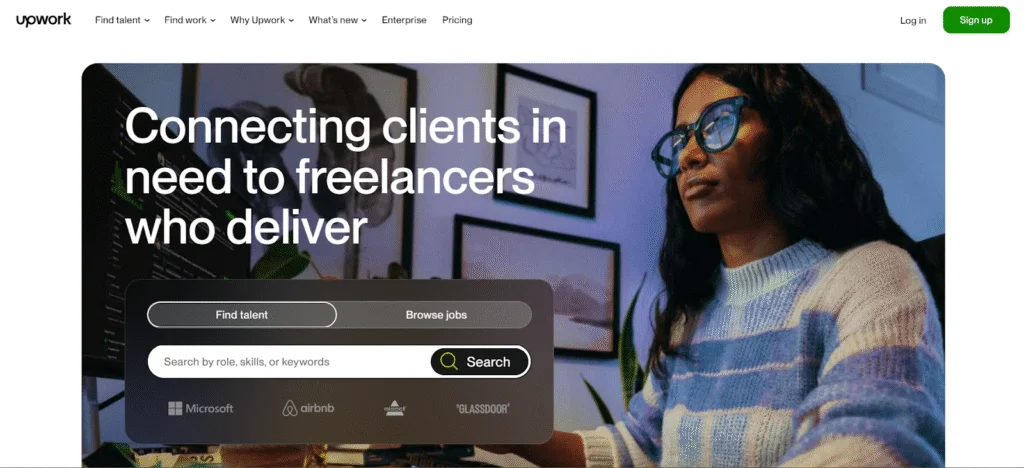
Upwork remains one of the most established platforms for freelancers seeking longer-term contracts and higher-budget projects, particularly in development, consulting, and specialized writing. It has a steeper learning curve for beginners due to competition and connects (credits) required to bid on jobs, but it tends to reward freelancers who invest time in building a strong profile.
Quick Answer: Upwork is generally considered one of the best freelancing websites for long-term, higher-budget projects, especially in development and consulting, though beginners should expect more competition compared to platforms designed for smaller, one-off gigs.
2. Fiverr — Best for Beginners Building Initial Reviews
Fiverr’s gig-based model, where freelancers create fixed-price service listings, makes it easier for complete beginners to get their first orders and reviews, particularly for smaller, well-defined tasks like logo design, voiceovers, or short-form content writing.
3. Freelancer.com — Good for a Wide Variety of Project Types
Freelancer.com covers a broad range of categories, from writing to engineering, and often has a large volume of smaller projects suitable for freelancers still building their portfolio and reputation.
4. LinkedIn — Best for Professional, Direct Outreach
While not a dedicated freelance marketplace, LinkedIn has become one of the most effective channels for experienced freelancers to find higher-value clients directly, particularly in B2B services, consulting, and specialized technical work, bypassing marketplace competition entirely.
Quick Answer: LinkedIn works well for experienced freelancers who want to bypass marketplace competition and connect directly with decision-makers at businesses, particularly for higher-value B2B and consulting work.
5. Toptal — Best for Highly Experienced, Specialized Talent
Toptal positions itself as a platform for the “top 3%” of freelance talent, with a rigorous screening process, primarily in software development, design, and finance. It’s not ideal for beginners, but experienced professionals can access notably higher-paying clients through it.
6. PeoplePerHour — Popular for UK and European Clients
PeoplePerHour has strong traction with clients based in the UK and Europe, making it a good option for freelancers targeting those specific regional markets, particularly in marketing, writing, and design services.
7. Contra — Best for Portfolio-Driven, Commission-Free Freelancing
Contra has grown popularity for allowing freelancers to showcase a strong visual portfolio without platform commission fees on transactions, appealing particularly to designers, video editors, and creative professionals. [link to related guide on how to start freelancing here]
8. Niche-Specific Platforms Worth Exploring
Beyond the major generalist platforms, niche sites exist for specific skills — such as writing-focused platforms, design-focused communities, and developer-specific job boards — which often have less competition and more relevant clients than broad, generalist marketplaces.
FAQs
Q: Which freelancing website is best for beginners? Fiverr is generally considered the most beginner-friendly due to its gig-based structure, which makes it easier to get initial orders and build reviews quickly.
Q: Which platform pays freelancers the most? Toptal and direct outreach through LinkedIn tend to connect freelancers with the highest-paying clients, though both typically require established experience and a strong portfolio.
Q: Do freelancing websites charge a commission? Yes, most charge a percentage commission on each transaction, though the exact rate varies by platform and sometimes decreases as you earn more through that platform over time.
Q: Can I use multiple freelancing websites at once? Yes, and many experienced freelancers do exactly this to diversify their client sources and reduce dependency on any single platform’s algorithm or policies.
Q: Is it better to freelance through platforms or find clients directly? Both have advantages — platforms provide built-in trust and discovery for beginners, while direct outreach (especially via LinkedIn) often yields higher rates once you have an established portfolio and reputation.
Conclusion
The best freelancing websites for you depend entirely on your skill level, niche, and target client type — there’s no single universal answer. Start with one platform that matches your current experience level, focus on building a handful of strong reviews, and expand to additional platforms or direct outreach as your portfolio grows. Spreading yourself too thin across too many platforms too early usually slows progress rather than accelerating it.
Suggested image alt text: “Freelancer comparing best freelancing websites on laptop screen”